.png)
"I’m a Newly Certified Open Water Diver — What Do I Do Next?" Helpful Tips and Next Steps to Guide You After Your Certification

Updated: Feb 1
Congratulations! Earning your Open Water Diver certification is a huge milestone. You’ve learned the fundamentals, demonstrated your skills, and officially joined the underwater world. But once the excitement of certification settles, many new divers find themselves asking the same question: “What do I do next?”
If you’re a newly certified diver wondering how to gain more experience, put into practice what you've learned and stay connected to scuba diving after completing your course, this month’s blog is for you. We’re breaking down the best next steps and our personal recommendations after earning your Open Water Diver certification, so you can build confidence, improve your skills, gain real-world experience, and continue your education with intention.
So let’s dive right in!
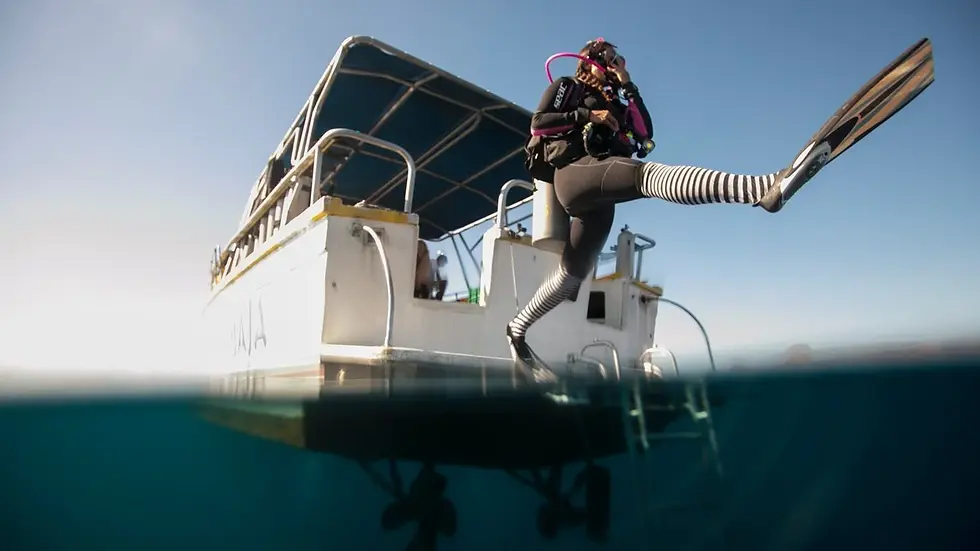
Or better said, let’s take the next step—one that helps you grow, gain experience and confidence underwater.
Certification vs Experience
While dive agencies frequently encourage newly certified divers to jump straight into the next big course—and then the next—many locations, particularly in the Caribbean, promote the Zero to Hero approach. Although it can sound exciting and promising, but true growth as a diver isn’t about speed—it’s about safety, experience, and steady progression.
“Zero to Hero” in diving usually describes an accelerated, bundled training path that takes someone from non-diver or sometimes already certified new diver all the way to a professional certification—most commonly Divemaster or Instructor—in a very short timeframe, normally less than a year and sometimes even in a few months.
Personally, I believe scuba diving is a journey, not a race and before taking a giant stride into the next higher level of certification, it’s worth asking yourself one honest question: “Am I truly ready to walk when I’ve just learned to crawl?”
Taking a little time to gain experience, reinforce fundamentals, and grow comfortable in the water lays the foundation for confident, capable diving—no matter where your path leads next.
I say this from experience—both as a diver who once stood exactly where you are, trained by an instructor who rushed through the process, and now as an instructor whose goal is to guide divers through their own journey at their own pace, helping them improve their skills, build confidence, and understand the difference between collecting certification cards and gaining the real-world experience that gives those certifications real meaning.
"The world needs more divers, but more importantly, it needs conscious divers. Divers who care and who are aware. Divers who are curious, responsible, value good training and who want to make a positive impact on the industry and the underwater world we love."
Below, you’ll find our top 8 tips and honest recommendations on what to do next after earning your certification
First Things First: Dive Insurance
While scuba diving is generally safe, having specialized dive insurance is strongly recommended for all divers. Many standard health and travel insurance policies exclude diving-related accidents, often classifying scuba diving as an “extreme sport.” Dive insurance helps bridge that gap by providing essential coverage for situations such as hyperbaric chamber treatment, which can cost thousands of dollars along with emergency medical evacuation and, in some cases, equipment loss or damage.
Although several dive insurance options are available, DAN (Divers Alert Network) is our preferred provider. Learn more about DAN through our referral link.
Meet Other Divers
If you’re reading this before starting or while completing your Open Water Diver Course, it’s a great idea to exchange phone numbers or social media with your fellow students. Those connections often turn into future dive buddies before you even realize it.
If you’ve already completed your course and still have your classmates’ contact info (or even just remember their names), don’t be shy about reaching out. Chances are, they’re just as excited to reconnect and get back in the water with other divers.
And it doesn’t stop after open water course. Every course you take is another opportunity to make new dive friends and grow your dive community.
Stay Connected to Diving
Joining a scuba diving community is one of the best ways to stay engaged after earning your certification. It’s common for new divers to slow down or even stop diving altogether simply because they don’t know many other divers to dive with.
Luckily, there are plenty of ways to stay connected. Facebook dive groups, other social media pages, local dive clubs, are great places to meet fellow divers, stay informed about upcoming dives, and participate in events, trips, social gatherings, and organized dive days. Being part of a diving community, especially locally keeps you motivated, builds confidence, and helps turn diving from a one-time certification into a long-term passion and often even a career.
(Stay tuned! Fishhead Scuba Adventure Club is coming soon!)
Get More Dives Under Your Belt
Taking the time to build experience, confidence, and comfort in the water can make a huge difference in how much you gain from your next course. Practicing what you’ve already learned, without the pressure of a class is honestly one of my biggest recommendations.
Throughout my diving career, I’ve noticed that divers are often far more nervous during training dives than on fun dives. Courses come with performance requirements, skills to demonstrate, and the pressure to “get it right,” whereas on a fun dive that pressure fades away. Free from evaluation, divers can relax, slow their breathing, and truly tune into how their bodies move and respond underwater.
This relaxed environment allows buoyancy control to develop more naturally, increases overall awareness, and builds genuine confidence—often in ways that structured training, especially early on, simply can’t replicate.
Dive and Explore
Whether you sign up for a dive trip with your local dive shop, join an organized trip locally, or squeeze in a dive while on a family vacation, diving opportunities are everywhere. Dive trips, in particular, are a great way to meet like-minded people, many of whom often become regular dive buddies and even future travel companions.
One of the best ways to improve your diving is by traveling with a dive group. On group trips, you get multiple dives in a short time, consistent guidance and support, time to practice and ask questions, the chance to learn from other divers and much more. By the end of a trip, many new divers feel like completely different divers than when they started.
*Check out our upcoming trips and upcoming events.
Dive Locally (Even If It’s Not “Tropical”)
It’s always a great idea to try diving in different environments when possible. Many divers start out with the goal of only diving in warm Caribbean waters, and while that is almost every diver’s ideal dive plan, expanding beyond that comfort zone can be incredibly valuable. Diving in different environments, especially close to home improves adaptability, and allows you to dive more frequently.
For example warm water vs. cold water, boat dives vs. shore dives, and calm conditions vs. mild current. The more variety you experience, the more confident and capable you’ll become as a diver.
If you’re diving locally, be sure to check the rules and regulations for the site beforehand. Some locations require a dive flag or permit, and others may have restricted or prohibited diving areas.
Get out there and get out of your comfort zone!
Join Professional Guided Fun Dives
If you’re not quite ready to dive without the support of a professional, or if you’re unfamiliar with a dive site, guided fun dives are a great option to not only dive for fun, but also to connect with other divers. This also allows you to become familiar with the site until you are ready to plan your own dive with you and your buddies. Many dive professionals or dive centers offer Discover Local Diving experiences, professionally guided dives that allow you to explore new locations safely while building confidence.
*Check out our Adventure Club for future group dives or contact us directly.
Continue Your Education
After getting a few fun dives under your belt, enrolling in another course, especially Specialty Courses can help you keep your skills fresh and keeps that excitement and curiosity alive. It reconnects you with the feeling that inspired you to become a diver in the first place.
"So Dani, what course do you recommend to be my next course?"
This question I get asked often, so here is my recommendation.
Peak Performance Buoyancy: Focus on Buoyancy Early On
While divers are commonly encouraged to jump straight into the Advanced Open Water Diver Course and it’s usually considered the “next logical step." I’ve personally found that students perform better and gain far more out of their Advanced Open Water Course by completing the Peak Performance Buoyancy Course first.
The Advanced Open Water course is a fantastic experience, and buoyancy being the core skill in diving, having strong buoyancy skills and a solid understanding of body position and control before tackling advanced skills is a true game changer.

In the Peak Performance Buoyancy course, for example, you’ll learn essential techniques such as breath control, efficient finning techniques, buoyancy and trim, and proper body positioning underwater. By focusing on buoyancy first, you set yourself up for success, not just in advanced training, but in every course that follows.
Remember: Your instructor gives you the tools to build a strong foundation, but the real progress happens when YOU keep building it. Apply what you’ve learned on each and every dive.
Advanced Open Water: The Most Common Next Step (When You’re Ready)
For many divers, the natural next step after Open Water Diver is the Advanced Open Water Diver Course (AOW). Despite its name, this course isn’t just about becoming an “advanced” diver—it’s about gaining experience and building confidence under supervision.
This course is designed as a sampler of specialty dives. You’ll complete two required core dives—deep diving and underwater navigation—then three additional specialty dives tailored to the local environment. This course is all about exploration and hands-on experience.
👉 Why it’s worth it: With this certification, your maximum depth goes from 60 ft (18m) to 100 ft (30m), opening up a whole new world of diving adventures. Many dive sites around the world require Advanced certification, especially for deeper dives or wreck explorations. So truly understanding the self-responsibility that the Advanced Open Water course introduces is essential to ensuring you gain real value from your advanced training.
Not everyone wants to keep “leveling up,” and that’s okay. Some divers prefer to specialize instead. Specialty Courses are a great way to continue your education and having fun. Below are some popular specialty courses and my recommendation in order:
Peak Performance Buoyancy – (If not already certified) Improve buoyancy control, trim, and efficient finning for smoother, more relaxed dives.
Enriched Air (Nitrox) – Perfect for dive trips with multiple consecutive dives each day. Extend bottom time, shorten surface intervals, reduce nitrogen loading, and experience less post-dive fatigue.
Equipment Specialist – Designed to help divers better understand the gear they rely on underwater. In this course, you’ll learn how scuba equipment works,
Dive Against Debris – Make a positive impact while diving. Learn how to safely remove marine debris and contribute valuable data to global conservation efforts.
Underwater Navigator – Build confidence using a compass and natural navigation techniques. Be the diver everyone trust to lead.
Underwater Photography – Capture your underwater memories while maintaining good buoyancy and awareness.
Deep Diver – Learn to plan and safely execute dives beyond 18 m / 60 ft.
Night Diver – Experience the underwater world after dark and discover nocturnal marine life.
Dry Suit Diver – Stay warm and comfortable while learning proper dry suit buoyancy and control. This also open doors to diving all year round.
Boat Diver – Gain skills for boat entries and exits, proper boat etiquette, and standard procedures when diving from boats.
Wreck Diver – Explore sunken ships and artificial reefs while learning wreck-specific safety techniques.
Drift Diver – Learn to dive with the current and let the ocean carry you.
Full Face Mask Diver – Discover the benefits of increased comfort, communication, and extended dive options.
These are only a few of the courses you can take.
Choose what excites you. Diving should always be fun, not a checklist.
Rescue Diver: The Confidence Booster
Once more comfortable in the water, many divers choose to continue with the Rescue Diver Course. This course is widely considered the most challenging and rewarding step in recreational diving. Before enrolling, divers must complete Emergency First Response (EFR) Primary and Secondary Care (or hold a qualifying certification from the past 24 months). EFR training covers CPR, AED, and vital first aid skills, ensuring you’re fully prepared for the rescue scenarios you’ll encounter during training.

Another valuable addition to EFR is the Oxygen Provider Course, which is often easily incorporated into the EFR training. This course teaches divers how to safely administer emergency oxygen, an essential skill for managing many dive-related injuries.
On your Rescue course, you’ll learn to recognize and prevent dive-related stress, assist tired or panicked divers, respond to emergency scenarios, and become a more aware and self-sufficient diver.
👉 Why divers love it: You come out feeling more confident, more capable, and more in control — not just for others, but for yourself.
Divemaster Program: Be a Role Model to Other Divers
Becoming a Divemaster is your first step into the world of professional diving. Typically offered as a program or internship, the Divemaster Course teaches leadership, safety, policies and procedures, logistics and the joy of sharing your passion for the underwater world.

As a Divemaster, you’ll supervise certified divers, assist instructors during training, and create unforgettable dive experiences. This role requires both valuable experience and a responsible mindset. You may also gain skills in dive shop operations, such as filling tanks, handling retail, and helping divers continue their journey—introducing new courses, equipment, and more.
A Divemaster becomes a mentor, both in and out of the water, ensuring every diver feels confident, safe, and inspired. In short, being a Divemaster isn’t just earning a title and card—it’s a commitment to the ocean, to diving, and to helping others explore it.
Common Responsibilities of a Divemaster
Leading and Guiding Dives – Plans and conducts dive trips, ensuring the safety and enjoyment of all participants.
Supervising Divers – Monitors certified divers during dives, keeping an eye on air supply, buoyancy, and overall safety.
Assisting Instructors – Supports scuba instructors during training sessions, helping with skills practice and demonstrations.
Dive Planning and Logistics – Checks dive sites, currents, weather conditions, and equipment to ensure safe and smooth dives.
Emergency Preparedness – Responds to underwater or surface emergencies, provides first aid, and manages rescue situations if needed.
Equipment Management – Maintains and organizes dive gear, ensures tanks, regulators, and safety equipment are ready for use.
Educating Divers – Explains dive plans, safety procedures, and environmental awareness to help divers gain confidence and knowledge.
Mentoring and Encouraging – Supports divers’ skill development and fosters a positive, fun, and safe diving environment.
Promoting Dive Centers – Represents the dive shop or resort professionally, providing excellent customer service.
Environmental Stewardship – Encourages responsible diving and protects marine ecosystems during every dive.
Scuba Instructor

Becoming a scuba instructor is a thrilling goal, but it’s also a big responsibility. You’re not just diving for yourself anymore, you’re teaching others to explore the underwater world safely. So, how do you know when the time is right? Here are key factors to consider:
1. You Have Solid Foundation Skills
Before thinking about instructing others, make sure your own diving skills are rock-solid:
Buoyancy control and trim are second nature
Comfortable diving in a variety of conditions (current, night, low visibility)
Confident with problem-solving and emergency scenarios underwater
If you still feel like you’re “learning on the job” during regular fun dive, it’s too early to teach.
2. You’ve Logged Sufficient Experience
Experience isn’t just about numbers—it’s about diversity. The more experience you have, the better prepared you’ll be to guide new divers safely and confidently.
Log plenty of dives, not only the required number of dives to become an instructor.
Continue to learn new skills and practice them regularly.
As a Divemaster, assisting in classes with a variety of students is crucial for learning how different divers react underwater. By reading a student’s body language, breathing, and behavior, you can accurately assess their ability and readiness—especially in open water, where nerves or panic can arise. Anticipating stress, intervening early, and adapting your teaching style are key skills that define a competent and confident instructor.
3. You Understand Safety and Risk Management
As an instructor, you’ll be responsible for other people’s safety. That means:
You can assess conditions and know when to say no
You’re capable of handling emergencies calmly
You understand how to plan dives for different skill levels
These aren’t just nice-to-have—they’re critical to being a professional diver.
4. You’re Ready for the Commitment
Teaching diving professionally is rewarding, but it also demands:
Time and energy for courses, dive trips, and student supervision
Continuous learning to stay current on procedures, equipment, and safety practices
Patience and strong communication skills
If you’re excited about sharing your passion and mentoring others, that’s a good sign you’re ready.
5. You’re Motivated by More Than a Certification
Becoming an instructor is not just another card. It’s a lifestyle choice. Ask yourself:
Do you genuinely enjoy helping others explore and learn?
Are you willing to put student experience above your own dive enjoyment?
Do you see yourself growing as a diver through teaching?
If the answer is yes, you’re on the right track.
There’s No “Right” Timeline
There’s no set schedule for when you should move on to your next course, and there’s no single moment when you’re “ready.” That said, rushing through training can sometimes lead to anxiety—or even panic—underwater. A few butterflies in your stomach are normal, but consistent anxiety is often a sign of uncertainty due to limited experience or skills.
Take your time. Grow at your own pace. Keep learning and improving.
Some divers progress quickly through courses, while others take years between certifications. Both paths are completely valid.
What matters most is that you:
Dive within your limits
Continue learning at your own pace
Respect the ocean
Enjoy every moment underwater
👉Your Open Water certification isn’t the end—it’s the beginning of a lifelong adventure. And one of the best parts of being a certified diver is that the ocean becomes your playground.
Thanks for reading!
Dive safe. Dive often. Catch you on next month's blog.
Dani
Comments